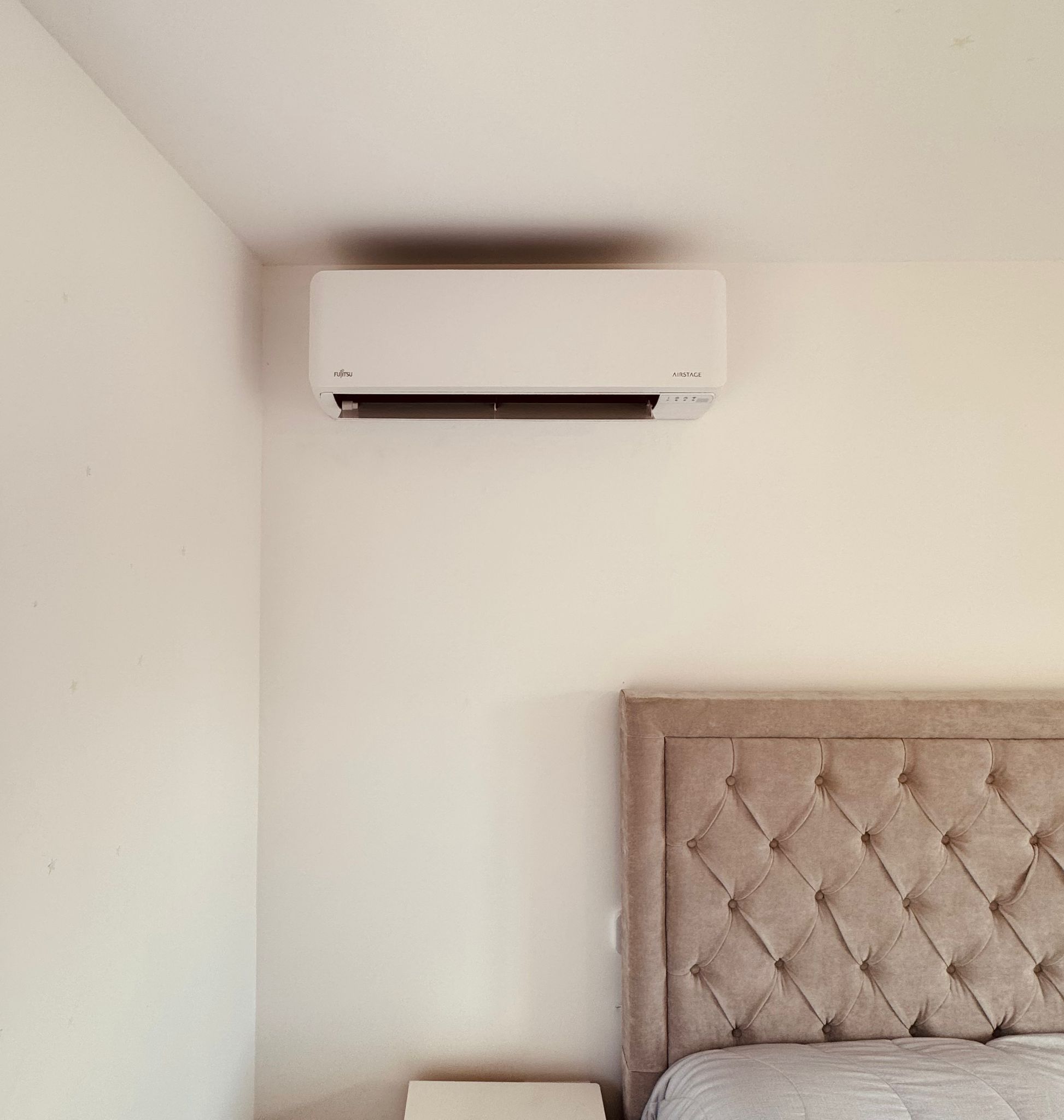
This is a great question that we get asked frequently — an air conditioning (A/C) system is very clever in the way that it works. It is actually some simple physics along with engineering built around a few principles of thermodynamics.
This is how it works –
An air conditioning system doesn’t just cleverly create cold air — it also removes the heat from the internal area and transfers it to the outside area. It magically does this by circulating a special type of refrigerant gas within the system, the refrigerant gas is a special type of fluid that can easily change between a liquid state and then gas, through a closed loop.
The Three Main Components
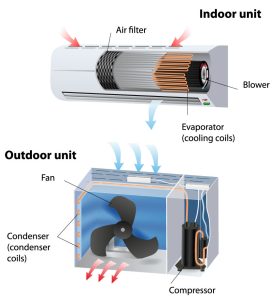
1. The Compressor
• Location: Within the outside unit.
• What it does: It compresses the refrigerant gas, as it does this is it raises the pressure of the gas and this also raises its temperature.
• Why: Hot gas at a high pressure generally is easier to transfer heat to the outside air.
Think of it like squeezing air in a bike pump — it gets hot when compressed.
2. Condenser Coil
• Location: Within the outside unit.
• What it does: The hot, high-pressure refrigerant gas flows through these coils.
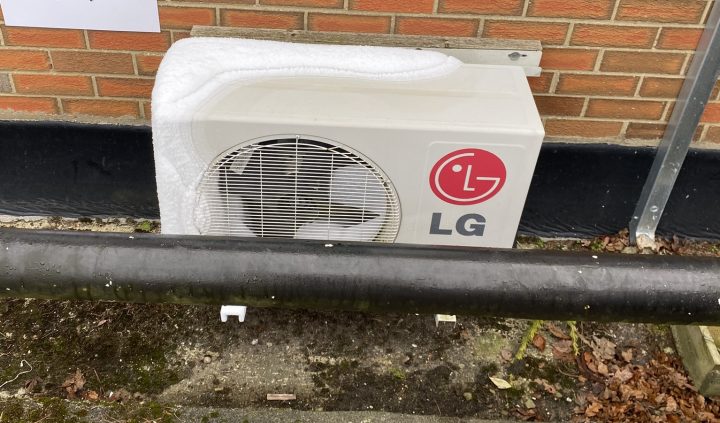
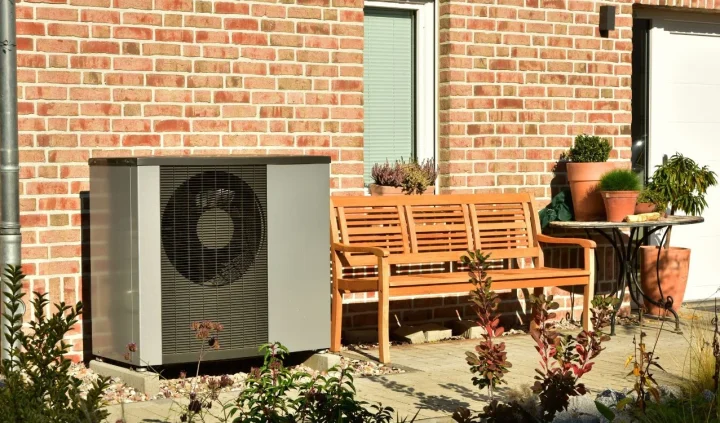
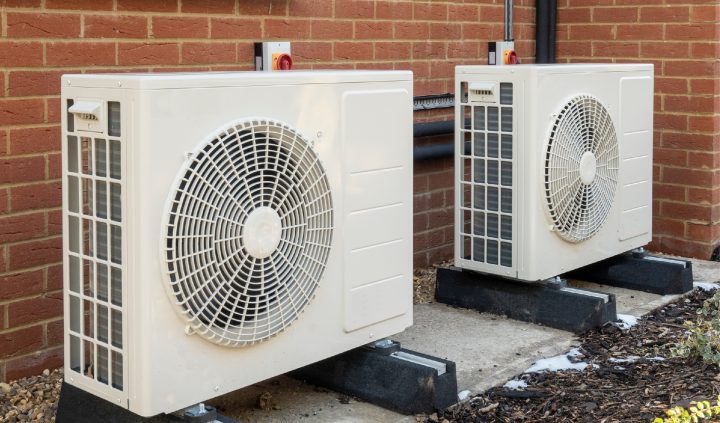
• Heat transfer: A fan blows outside air over the coils, cooling the refrigerant and turning it into a high-pressure liquid as it releases the heat outdoors and into the atmosphere.
This is the part where heat leaves your house.
3. Evaporator Coil
• Location: Within the internal AC unit that would be inside the building.
• What it does: The pressurised cold refrigerant absorbs heat from the indoor air as a blower fan pushes that air over the coil.
• Result: As the refrigerant gas evaporates (turns into a gas again) it absorbs heat within the room, and the now-cooled air is blown through the Air Conditioning system and into the room.
This is where your air feels very cold air coming out of the system.
The Cycle Repeats
The refrigerant gas has now turned back into a warm low-pressure gas, this now returns back to compressor and the process starts over again.
What About any Condensation?
When the warm and humid indoor air hits the cold evaporator coil, the moisture starts to condensate, this is the same principle as the water that you’ll see appearing on the outside of a very cold drink on a warm day. As the moisture turns to water, it collates into a condensate tray and then exits the system via a condensate drain line.
This is the reason why Air Conditioning systems also help with dehumidifying the air.
So, how does an AC system provide heat?
The key is the refrigeration cycle as mentioned above but initially in reverse. When using the system for both cooling and heating the system uses the same basic process – moving heat using a refrigerant.
In cooling mode, the system absorbs heat from inside your home and through the refrigerant cycle it then releases it outdoors. In heating mode, it does the same cycle but in reverse — it absorbs heat from outdoors (even very cold air contains some heat energy) it then releases it inside the building.
The Role of The Reversing Valve
In systems that have the ability to provide both heating and cooling (typically called heat pumps) they contain a component called a reversing valve. This valve basically reverses the flow of refrigerant within the system. When the flow is in reverse, the indoor coil becomes the condenser (releasing heat into the building) and the outdoor coil becomes the evaporator (absorbing any heat from the outside air).
So, instead of producing heat directly, the system is transferring it.
Energy Efficiency Advantage
Because the AC system is cleverly moving heat instead of creating it, it can deliver 4 times more heating energy than the electrical energy that it consumes — this is why heat pumps are now the most popular and cost effective way to heat any building.